Aarhus Universitets segl

Environmental DNA

- eDNA: a research area in focus at the Department of Environmental Science (a "Strategic Growth Area", SGA)
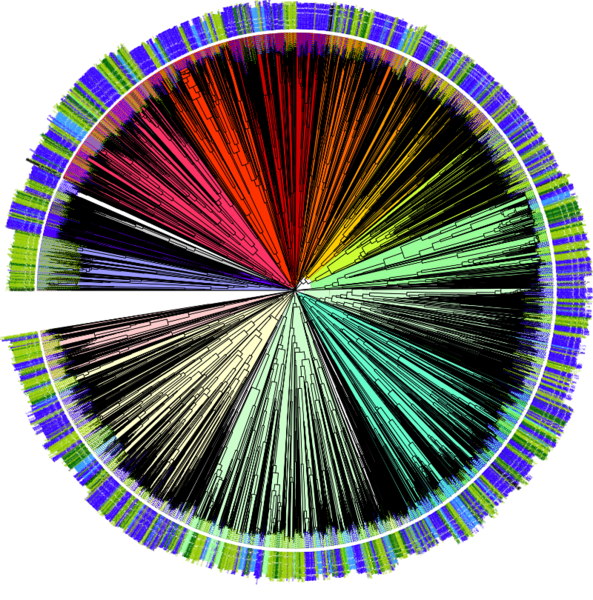
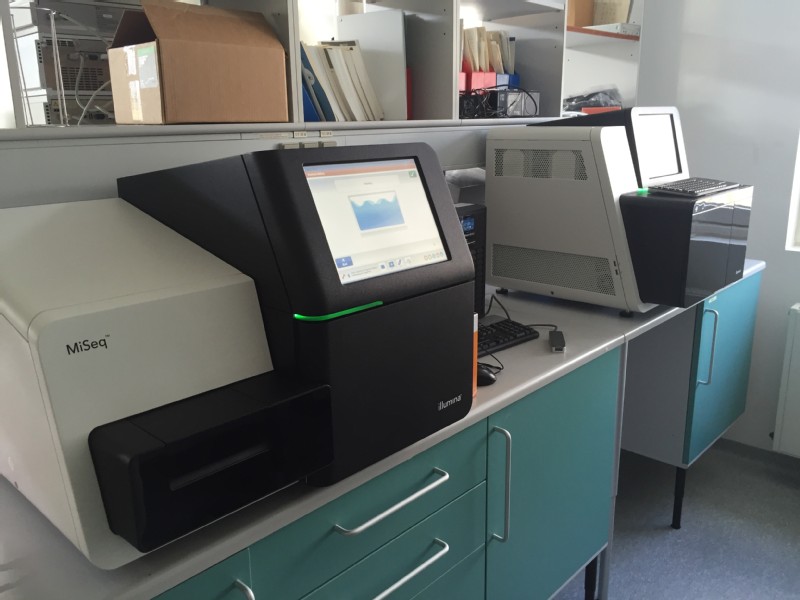
Microorganisms are present in practically all parts of the environment as well as in tissues of living organisms, where they may greatly influence the life of humans and the environment in multiple ways. DNA sequencing analysis of microbial DNA sampled from these environments constitutes a great opportunity to study the role and ecology of these organisms and get insight into their metabolism, function and evolutionary relationship. The Section of Microbiology and Biotechnology houses state-of-the-art sequencing facilities to support participation in all types of projects involving analysis of microbial eDNA. This includes identification of single microorganisms and entire microbial communities in various matrices, their expression of genes relevant for provision of important ecosystem services and health of humans, animals and plants. In addition, the eDNA SGA works with development of techniques for detection and monitoring of DNA from higher organisms.
Main research areas

  • Study microbial eDNA from various environments (soil, water, atmosphere, the arctics, animal gut, food production) in order to understand their ecology and function in these settings.
  • Through DNA sequencing investigate genetic drivers of bacterial evolution by comparing metagenomic contents of between pristine and evolutionary challenged environments.
  • Characterization of bacterial communities by 16S rRNA gene analysis, whole genome sequencing of key microbial organisms (vira, bacteria, fungi and protozoans) and transcriptome analysis related with diseases in humans, animals and plants and degradation of pollutants.
  • Use eDNA analysis to understand the role of microbes in provision of ecosystem services like biogeochemical cycling of nutrients, degradation of organic micro pollutants, suppression of plant pests.
  • Detection and risk assessment of hazardous microorganism in air, soil, water and food in relation to human and environmental health.
  • Mobilomics: Sequence-based studies on mobile genetic elements such as plasmids, bacteriophages and IS elements.

Examples of recent and ongoing projects 

Publications

Environmental DNA - publications within the research area.

Click to expand publications list

Jakszyn, P., Luján-Barroso, L., Agudo, A., Bueno-de-Mesquita, H. B., Molina, E., Sánchez, M. J., Fonseca-Nunes, A., Siersema, P. D., Matiello, A., Tumino, R., Saieva, C., Pala, V., Vineis, P., Boutron-Ruault, M.-C., Racine, A., Bastide, N., Travis, R. C., Khaw, K.-T., Riboli, E. ... González, C. A. (2013). Meat and heme iron intake and esophageal adenocarcinoma the European Prospective investigation into Cancer and Nutrition study. International Journal of Cancer, 133(11), 2744-50. https://doi.org/10.1002/ijc.28291
Ellegaard-Jensen, L., Knudsen, B. E., Johansen, A., Albers, C. N., Aamand, J. & Rosendahl, S. (2014). Fungal-bacterial consortia increase diuron degradation in water-unsaturated systems. Science of the Total Environment, 466-467, 699-705. https://doi.org/10.1016/j.scitotenv.2013.07.095
Imparato, V., Santos, S., Hansen, V., Johansen, A., Giagnoni, L., Renella, G., Nielsen, H. H. & Winding, A. (2014). How do soil biota react to gasification biochar?. Poster-session præsenteret på ISME Symposium , Seoul, Sydkorea.
Albers, C. N., Ellegaard-Jensen, L., Harder, C. B., Rosendahl, S., Knudsen, B. E., Ekelund, F. & Aamand, J. (2015). Groundwater chemistry determines the prokaryotic community structure of waterworks sand filters. Environmental Science & Technology, 49, 839-846. https://doi.org/10.1021/es5046452
Nunes, I., Jacquiod, S., Brejnrod, A., Holm, P. E., Johansen, A., Brandt, K. K., Prieme, A. & Sorensen, S. J. (2016). Coping with copper: legacy effect of copper on potential activity of soil bacteria following a century of exposure. FEMS Microbiology Ecology, 92(11), Artikel fiw175. https://doi.org/10.1093/femsec/fiw175
Wang, Y., Qin, Y., Kot, W., Zhang, F., Zheng, S., Wang, G., Hansen, L. H. & Rensing, C. (2016). Genome Sequence of Selenium-Solubilizing Bacterium Caulobacter vibrioides T5M6. Genome Announcements, 4(1), Artikel e01721-15. https://doi.org/10.1128/genomeA.01721-15
Jacquiod, S. J. A., Stenbæk, J., Santos, S., Winding, A., Sørensen, S. J. & Priemé, A. (2016). Metagenomes provide valuable comparative information on soil microeukaryotes. Research in Microbiology, 167(5), 436-450. Artikel 167. https://doi.org/10.1016/j.resmic.2016.03.003
Eckholdt, A., Winding, A. & Krogh, P. H. (2017, nov. 15). Dine marker har DNA. FBG Medier A/S.
Hylling, O., Fini, M. N., Muff, J., Madsen, H. T., Aamand, J., Hansen, L. H. & Ellegaard-Jensen, L. (2017). Aminobacter sp. biodegradation of  2,6-dichlorobenzamide (BAM) is stimulated in membrane treated residual water. Poster-session præsenteret på Danish Microbiological Society (DMS) congress 2017, Copenhagen, Danmark.
Hylling, O., Fini, M. N., Muff, J., Madsen, H. T., Aamand, J., Hansen, L. H. & Ellegaard-Jensen, L. (2017). MEM2BIO - Membrane residual water as a feed for bioaugmented waterworks sand filters. Poster-session præsenteret på the second international congress on microbial resource management (MRM2), Ghent, Belgien.

...

Environmental DNA - persons involved

Lea Ellegaard-Jensen , Lektor , Institut for Miljøvidenskab - Mikrobiel Økologi
Ulrich Bay Gosewinkel , Seniorforsker , Institut for Miljøvidenskab - Mikrobiel Økologi
Niels Bohse Hendriksen , Seniorforsker , Institut for Miljøvidenskab - Mikrobiel Økologi
Carsten Suhr Jacobsen , Institutleder, professor , Institut for Miljøvidenskab
Anders Johansen , Seniorforsker, sektionsleder , Institut for Miljøvidenskab - Mikrobiel Økologi
Anne Winding , Professor , Institut for Miljøvidenskab - Mikrobiel Økologi